Lessons from 2022 to weather the Hormuz crisis
The current context: a dangerous energy déjà vu
Just when the energy crisis seemed to be entering its final phase in Europe, against a backdrop of expected gas oversupply and a clearly bearish price trend, geopolitical reality has struck again. The outbreak of war in Iran and the subsequent blockade of the Strait of Hormuz have not only shaken the oil market but also triggered a fresh, unprecedented shock in international natural gas markets.
For European consumers and industry, this scenario is a dangerous déjà vu of the 2021–2023 crisis. Once again, the design of the European electricity market —based on marginal pricing— has exposed its great Achilles heel: when natural gas spikes, combined-cycle gas turbines (CCGTs) drive electricity prices up because they are the technology that typically sets the day-ahead price.
While the high renewable penetration on the Iberian peninsula, together with substantial hydroelectric reserves, is cushioning this effect (at least in the day-ahead market), the same is not happening in markets more dependent on natural gas, such as Italy and central-northern Europe.
The “decoupling” debate: Italy’s proposal and the Spanish laboratory
Faced with this new emergency, countries like Italy have recently raised their voices, demanding urgent and drastic measures to decouple the gas price from electricity price-setting, and thus protect their consumers by intervening in the market before prices destroy demand.
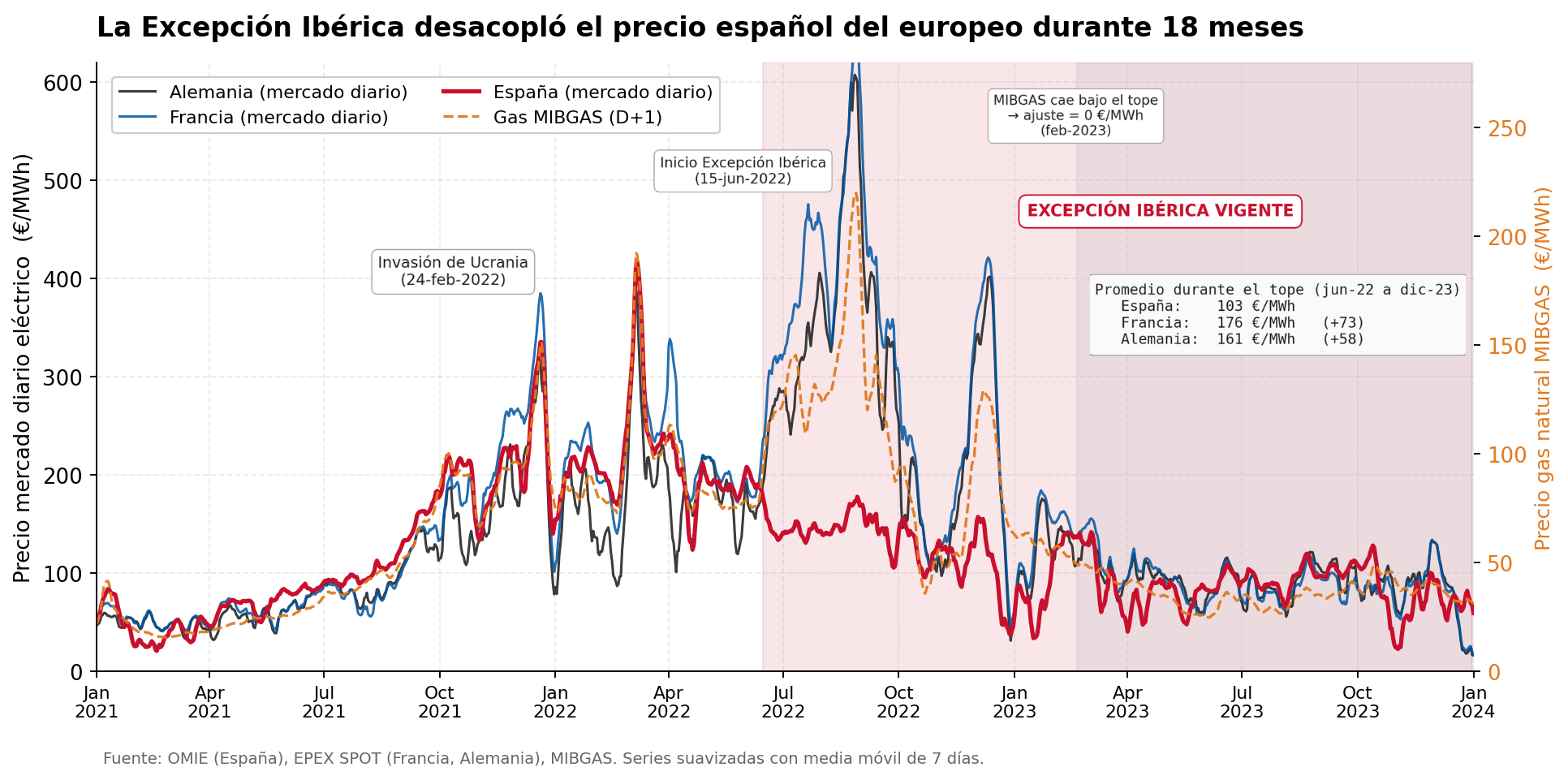
Chart 1 — Divergence of the Spanish day-ahead price from European prices during the Iberian Exception.
But before Europe invents a new emergency mechanism, it is worth looking back. Just four years ago, the Iberian system already operated as Europe’s great laboratory for “decoupling” by implementing the famous Iberian Exception (or gas price cap mechanism).
That mechanism, urgently approved given the peninsula’s isolation as an “energy island”, did not intervene in the gas market. Instead, it operated inside the guts of the electricity market (OMIE):
- It forced gas-fired plants to bid with a maximum reference price (a fictitious cap), artificially pushing down the day-ahead market price.
- In exchange, it set up a compensation system (the “adjustment”), which spread among consumers the difference between the actual gas cost and that fictitious cap, so that generators would not operate at a loss.
What was the theoretical framework of the mechanism?
To understand how a gas price limit affects the price of electricity, it is worth understanding how CCGTs and other thermal plants calculate their marginal cost when bidding into the day-ahead market.
A CCGT’s objective is to ensure that its sale price covers its variable costs and yields a positive margin, technically known as the Clean Spark Spread. The formula for its marginal cost is:
Marginal cost = (Gas price + Emission factor · CO₂ price) / Thermal efficiency + O&M cost
Considering an efficiency of 55 % for combined-cycle plants, every additional euro in the gas price translates into almost two euros (1.82 €) in marginal cost. If on 1 January 2021 the gas price was €20.5/MWh, and on 31 December 2021 it was €76/MWh, CCGTs needed approximately €100/MWh more to cover their costs, raising the marginal price for every hour they cleared, applied to all the energy cleared.
To give a practical example, assuming a CO₂ cost of €65/t, an emission factor of 0.2 t/MWh thermal, an efficiency of 55 % and an O&M cost of €2.5/MWh electric, a CCGT’s offer price would vary as follows:
- 01/01/2021: MIBGAS at €20.5/MWh → OMIE at €63.4/MWh
- 31/12/2021: MIBGAS at €76/MWh → OMIE at €164.3/MWh
In a specific hour with 30,000 MWh generated in the system distributed across the following technologies:
| Eólica | Solar | Nuclear | Hidroeléctrica | Térmica |
|---|---|---|---|---|
| 16.000 | 3.500 | 6.000 | 2.000 | 2.500 |
The system’s extra cost would be 3 million euros (30,000 MWh × (164.3 − 63.4) €/MWh), spread among all the technologies that cleared their energy. This extra cost originates from a generation overrun in gas plants representing 250 thousand euros from the increase in their fuel cost. Capping the gas price was meant to ensure that demand only paid this extra cost to the gas-dependent plants, and not to all generators in the system.
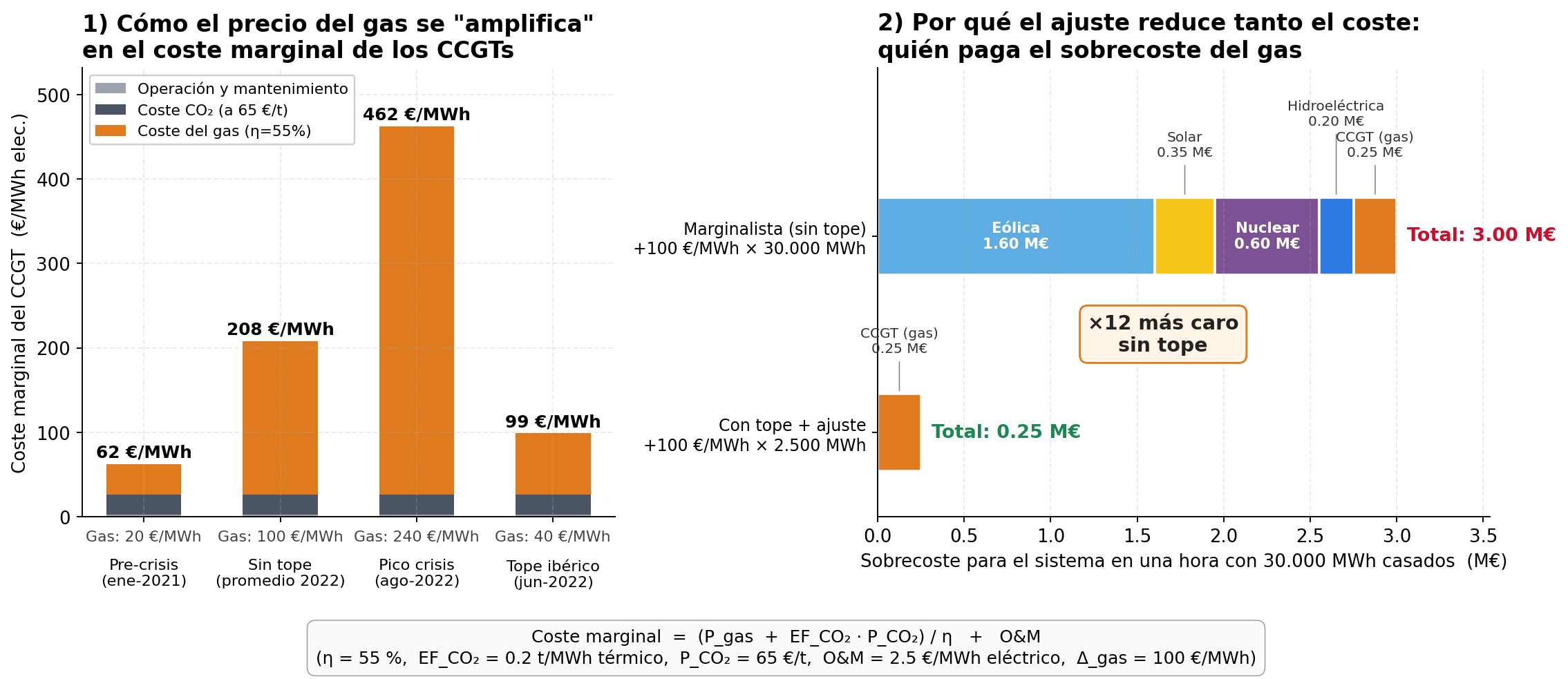
Chart 2 — The amplifier effect of the gas price on the marginal cost of CCGTs.
What was the impact on the electricity price?
The data speak for themselves. Before 15 June 2022, the day-ahead price in Spain moved practically hand-in-hand with France and Germany: in the first half of 2022 the three countries averaged between €178 and €222/MWh, with Spain in an intermediate position. The Iberian Exception came into force on 15 June and, almost overnight, the prices of the peninsula and central Europe diverged spectacularly.
Over the 18 months the mechanism was in force (15-Jun-2022 to 31-Dec-2023), the average day-ahead price was:
- Spain: €103/MWh
- France: €176/MWh (+€73/MWh vs. Spain)
- Germany: €161/MWh (+€58/MWh vs. Spain)
And the difference became staggering at the height of the crisis. In August 2022, with MIBGAS reaching nearly €240/MWh, there were days when France was more than €500/MWh above Spain in the day-ahead market. The peninsula literally became an island of low prices in an electricity market that was on fire across the rest of Europe.
That unprecedented spread boosted exports to France, which reached 13.4 TWh in 2022 —the largest exporting balance in history vis-à-vis the neighbouring country— and the interconnection ended up saturated in the exporting direction 100 % of the hours in July and 99 % in August. Those extraordinary margins generated equally extraordinary incentives.
Two years later, that context has had a notable epilogue in the form of three sanctioning proceedings. In late 2024, the CNMC imposed fines on Axpo Iberia (€1.5 M), Neuroenergía (€1.08 M) and Gesternova (€6 M) for allegedly manipulating the intraday continuous market —the European mechanism that allocates, on a first-come, first-served basis, the cross-border capacity left available after the day-ahead market— precisely in trading sessions held during the period when the gas cap was in force. According to the CNMC, the three operators would have submitted and withdrawn sell orders without any real intention of executing them, with the aim of securing an advantageous position to place their genuine sales across the border with France. The three sanctions, classified as serious infringements of the European REMIT Regulation, have been appealed by the companies, which argue that this is a legitimate optimisation practice. Whether or not each fine is ultimately upheld, the case illustrates a rarely discussed side-effect of the mechanism (and of any market intervention more broadly): an artificially low cap on one side of a saturated border creates enormous incentives to capture the spread, and the regulator ended up pursuing conduct that, without the Iberian Exception, would probably have gone unnoticed for lack of a margin worth the effort.
From 20 February 2023 onwards, however, MIBGAS fell below the cap reference price and the mechanism effectively ceased to apply: the adjustment was zero for the rest of the year, even though the regulation remained formally in force until 31 December 2023.
The hidden price: the adjustment and the underlying convergence
The previous chart, however, only tells half of the story. The day-ahead price published by OMIE is not what consumers covered by the mechanism actually paid (regulated PVPC tariff and most free-market contracts signed or renewed since 26 April 2022). On top of that price, you had to add the adjustment: the compensation that consumers had to transfer to gas and coal plants so they would not operate at a loss.
When everything is put on the table —wholesale price plus estimated adjustment— the result is still clear, but less spectacular:
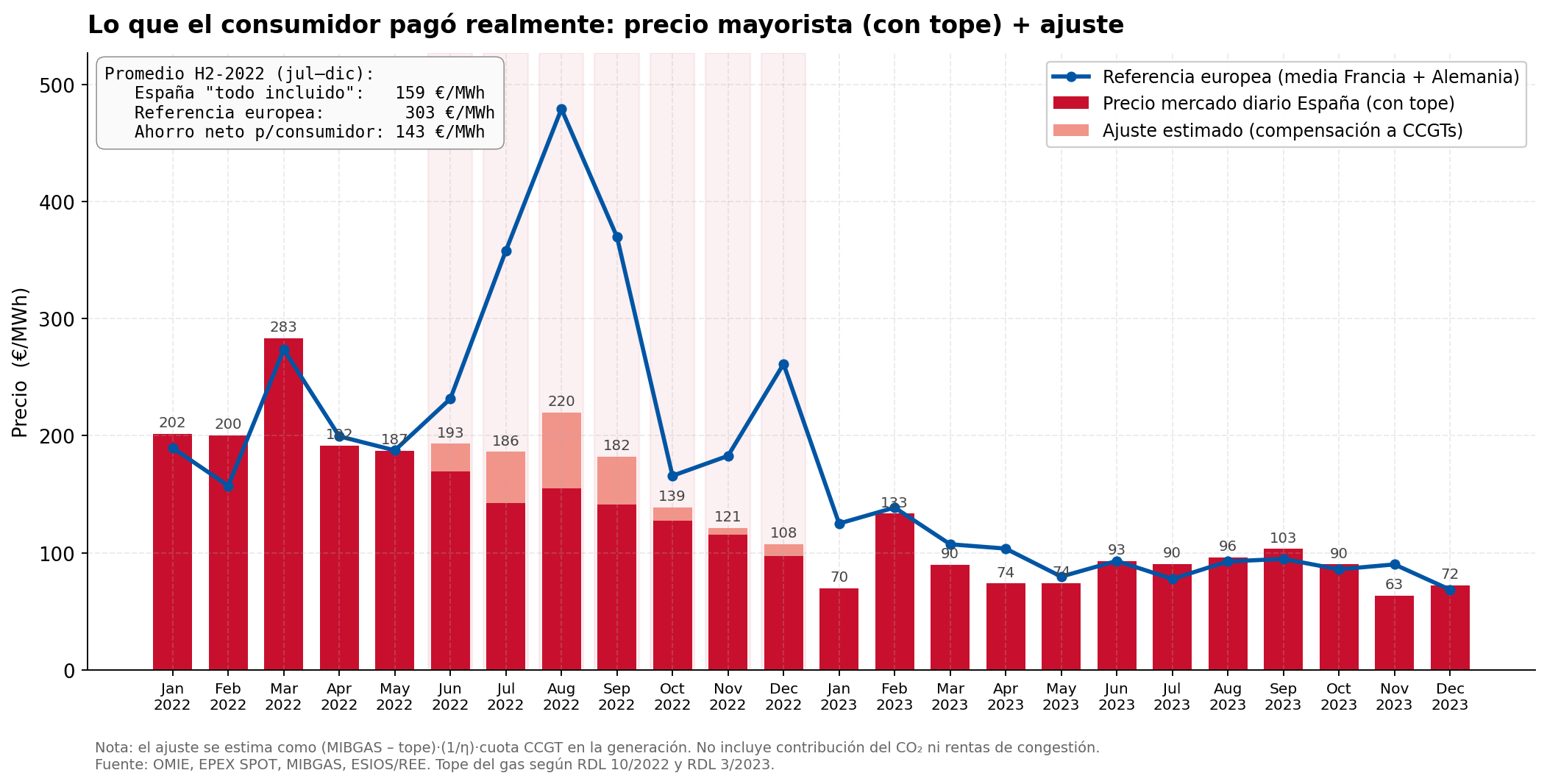
In the second half of 2022, in the middle of the perfect storm, the “all-in” cost in Spain was around €159/MWh compared to €303/MWh for the average of France and Germany. That is, a net saving of around €140/MWh for the Iberian consumer, even after paying the adjustment. In quantitative terms, the measure was a success: total compensation costs were authorised at up to €8.4 billion across Spain and Portugal, but the savings generated across the rest of the market were several times higher. This was possible due to a simple matter of volume: the adjustment is only paid on energy generated with gas, while the saving on the marginal price applies to all the energy cleared.
The double paradox: CCGT rose, cogeneration collapsed
If you only look at the impact on the consumer’s wallet, the verdict is positive. But the mechanism had two awkward side-effects for an energy policy that, let us not forget, aims to accelerate decarbonisation.
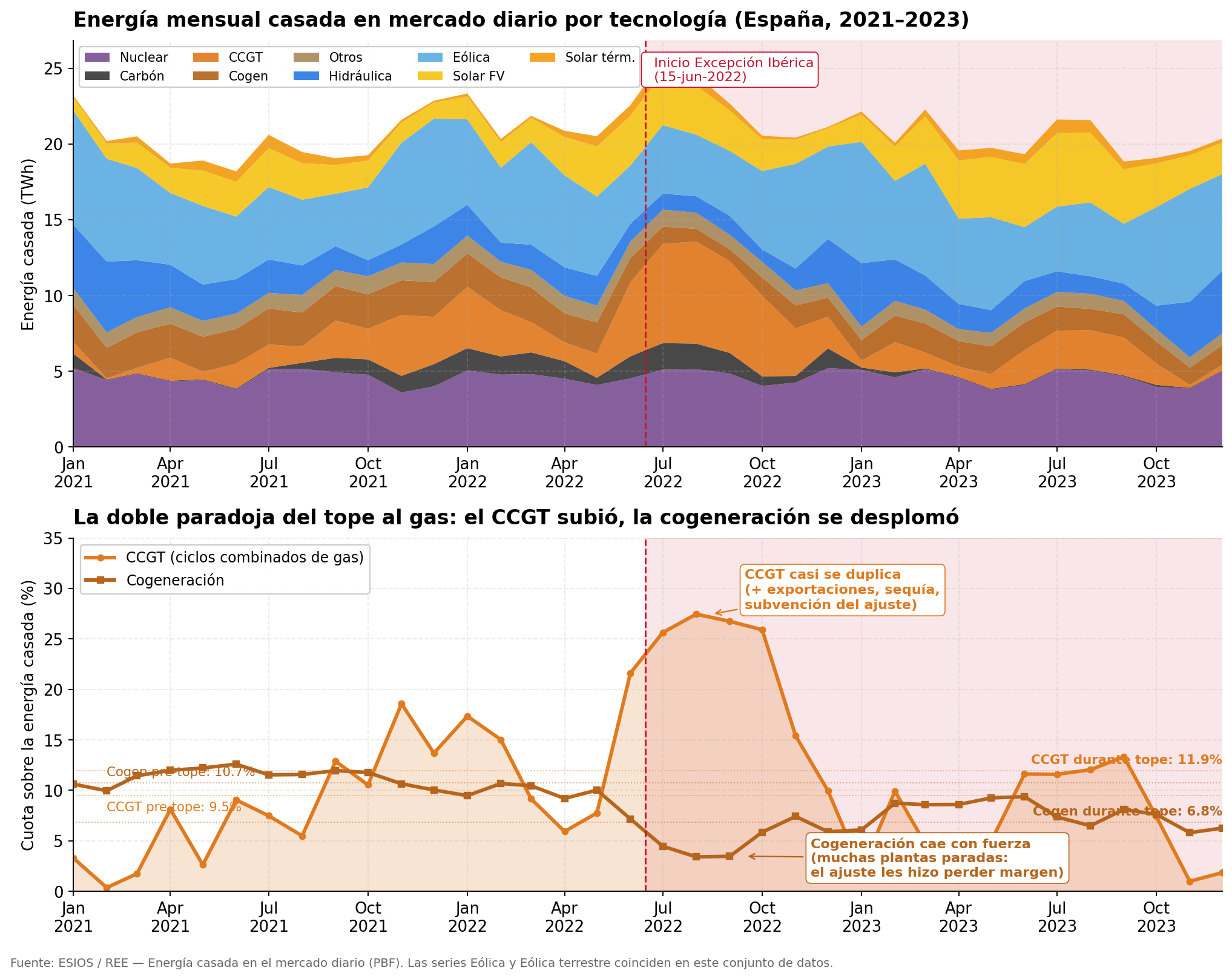
Chart 4 — Energy cleared in the day-ahead market by technology and the double paradox CCGT vs. cogeneration.
When the price crisis broke out, combined-cycle gas plants nearly tripled their cleared volume in 2022 (from 19.1 TWh in 2021 to 46.7 TWh in 2022), reaching share peaks of 27.5 % in August 2022. That is, the gas cap, paradoxically, increased gas-fired generation precisely when the climate priority was to reduce it. There are three reasons for this:
- Implicit subsidy to CCGT operation. By not bearing the real fuel cost, combined-cycle plants could bid at a lower variable cost and were cleared more often.
- Massive exports to France. With France’s nuclear fleet at historic lows due to corrosion and maintenance issues, and European prices skyrocketing, Spain shifted from net importer to a major exporter of electricity through the Pyrenean interconnection. That additional energy had to be generated, and it was mostly produced by CCGTs (so-called congestion rents were partly returned to consumers to mitigate this effect).
- Drought and low hydro availability. The summer of 2022 was one of the worst in hydroelectric production of the last decade, leaving CCGTs as the only flexible reserve available.
The flip side of the coin received much less media attention but is equally relevant: cogeneration collapsed. It went from 27.4 TWh cleared in 2021 to 19.0 TWh in 2022 (–31 %) and never recovered the previous level, staying at 18.7 TWh in 2023. Cogeneration’s share of energy cleared fell from an average of 10.7 % before the cap to barely 6.8 % during the mechanism, with troughs below 3 % in autumn 2022.
In other words, the mechanism met its economic objective (protecting the consumer) but at the cost of a physical effect contrary to the climate ideal: a worse mix, more emissions and lower efficiency.
Lessons for Europe: what the Iberian Exception teaches, and what it does not
Four years on, the Iberian experience offers five lessons that are worth keeping in mind before replicating similar mechanisms:
- It works, but only under very specific conditions. The Iberian success rested on a hard-to-replicate combination: high renewable penetration, substantial hydraulic reserves, and limited interconnection with central Europe that acted as a natural buffer against “leakages” of the savings. Italy, with almost double the CCGT share and a position as a European crossroads, does not have those conditions.
- Its temporary nature was part of the success. The Iberian Exception worked precisely because it was an emergency mechanism with an expiry date. A structural intervention permanently distorts economic signals, deters renewable investment, and creates political dependence on the mechanism itself.
- Price intervention is never free. The €8.4 billion authorised for Spain and Portugal were only the visible part: the increase in gas-fired generation, subsidised exports to France, and greater exposure to MIBGAS volatility are real costs, even if they do not appear in any official Gazette.
- Interconnection and congestion rents change the calculation. In 2022, the interconnection with France transferred part of the mechanism’s benefit to a country that was not financing it. Any future European “exception” will need to design from the outset a mechanism for sharing those rents or accept the leakage.
- Structural protection does not come from intervening the marginal market, but from reducing exposure to gas. More renewables, more storage (hydro, batteries, hydrogen), more demand response and, in the Italian case specifically, an acceleration of solar and onshore-offshore wind deployment. That is what makes Spain today better able to withstand the Hormuz shock than Italy or Germany — not the option of reapplying a gas cap.
So what do we do about Hormuz?
The Strait of Hormuz crisis is not the 2022 crisis. Today Europe starts with better-managed gas storage (Spain at around 68 %, vs. 24 % in Germany), much more diversified gas interconnection, and an AccelerateEU plan coordinating joint LNG purchases with Japan and South Korea. Current TTF prices, in the €40–45/MWh range, are far from the panic of August 2022.
But the lesson from the Iberian Exception is not that it should be repeated, quite the opposite: it was the best possible solution for a country that had not done its homework on time. The real shield against the next Hormuz, the next Putin, or the next geopolitical black swan, is not the caps or the rebates. It is the renewable gigawatts installed before the crisis arrives, the gigawatt-hours of storage ready to arbitrage volatility, and a demand side that can flex during critical hours.
If Italy, Germany or any other Member State end up replicating some kind of mechanism in the coming months, the important thing will be that they remember something that is easily forgotten: the Iberian Exception worked, but it had an expiry date for a good reason. Mistaking an emergency patch for a structural policy is the surest recipe for the next crisis to catch us, once again, without having done our homework.
If you found it interesting, please share it!
Recent Articles